Why am I always tired? What the usual tests can miss
About half of tired patients never get an explanation. I've been tired for years, so I went through the research on what the usual tests miss, what to stop blaming, and what's left to try.
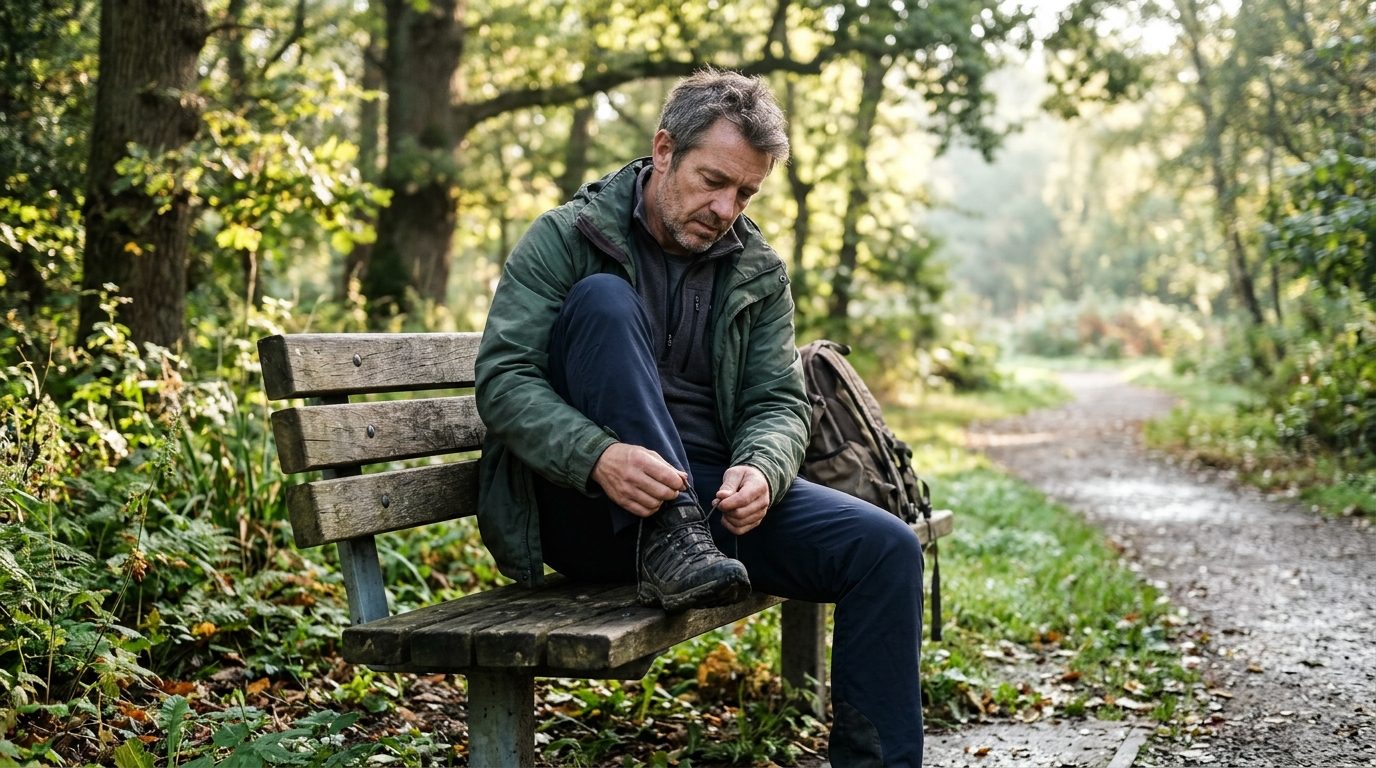
I've been tired for years. Crohn's disease explains some of it, but not all of it. I've done blood tests, stool tests, sleep tests and food intolerance tests. No doctor has been able to tell me where the rest of it comes from.
So I went through the research on people like me: tired for a long time, with tests that don't show why.
The short version
- About half of tired patients never get an explanation, and serious illness is uncommon.
- The usual tests can miss low iron stores, low mood and poor sleep. Blood specialists have just raised the line for what counts as low iron.
- A slightly off thyroid result, vitamin D, adrenal fatigue and testosterone rarely turn out to be the answer.
- If everything really is normal, there's no proven fix, but a few things are worth trying.
The odds nobody gives you
Researchers in the Netherlands followed 571 people who went to their doctor with new tiredness. A year later, about half had no diagnosis that could explain it. Only about 8 in 100 had a clear physical disease.1
That doesn't mean you should ignore it. If it's lasted a few weeks with no clear reason, the NHS says to see a doctor. That goes double if you're losing weight, your mood has changed, or someone has heard you gasping in your sleep.2
The basic blood tests are worth doing. Just know that they'll probably come back normal, and that doesn't mean you're imagining it.
What the usual tests can miss
Your iron stores. The standard blood count checks whether you have enough healthy red blood cells. But your body also keeps a store of iron, and that store can run low long before your red blood cells suffer.
A different test, called ferritin, measures that store. It often isn't done. When Scottish researchers looked at nearly 17,000 blood test requests for tired patients, fewer than 1 in 10 asked for it.3
Even when it is done, "normal" can mislead. Your result gets flagged as low only below a certain line, and that line is often too low. In September, the American Society of Hematology, a group of blood specialists, suggested new lines for adults:4
- 30 or under counts as low iron. The old line was usually 15. (Your results may say ng/mL or µg/L. The number means the same either way.)
- Up to 50 also counts if you're tired, or if you have Crohn's, eat vegetarian or give blood often.
So ask for your actual number, not just "it's fine".
There are catches. This is new US advice, and the evidence behind it is thin, so your doctor may not follow it yet. A higher line also flags some people who aren't really low, and they can end up with tests or iron they don't need.4
Inflammation is the other catch. It pushes ferritin up, which can hide low iron. If you have something like Crohn's, rheumatoid arthritis or an infection, your doctor may need a second iron test, called transferrin saturation.4
I'd never heard of ferritin before this post, so I dug out my blood test from October. Mine was 54, above both lines. My inflammation test (CRP) was normal that day, too. So low iron probably isn't why I'm tired.
Would iron help if you're low? For women who still have periods, probably. In a French trial, 198 tired women with ferritin under 50 took iron or a dummy pill for 12 weeks. Both groups felt less tired, but the iron group improved more: their tiredness fell by about half, against under a third with the dummy pill.5
For others, it's less clear. In a Swiss trial of 405 blood donors with low ferritin, an iron drip did no better than a dummy drip.6 And I couldn't find a trial in tired men at all.
If you're a man, or a woman past menopause, low iron needs explaining, because it can come from a problem in the gut.7 So don't start iron without a blood test, and if yours is low, ask why.
Your mood. In one review, nearly 1 in 5 tired patients turned out to have depression. Nothing else it counted was more common.8 Germany's guideline for family doctors tells them to ask tired patients about depression and anxiety.9
If your doctor doesn't ask, bring it up. You can just say, "I've been feeling flat too." Depression is treatable, and I've noticed my energy gets better when my mood does.
Your sleep. When my daughter was born I got about 6 hours a night. Later I got more hours, but they were broken, and I'd lie awake for long stretches. So I spent a few weeks on a restricted sleep schedule, and it seemed to work.
It sounds backwards. You spend less time in bed, with set times for going to bed and getting up, so you're sleepier when you get there. Then the times get adjusted over several weeks.10 In an English trial of 642 adults with insomnia, four sessions of it with a nurse beat a booklet of sleep tips.11
That trial measured insomnia, not tiredness, and I still wake a lot. But my energy is better than it was. If you lie awake at night, ask your doctor about CBT for insomnia, a short course of therapy that uses this kind of schedule. Get someone to guide you, because it can make you sleepier at first.10
If someone has heard you snore loudly, gasp or stop breathing in your sleep, ask about sleep apnea, where your breathing keeps stopping during the night. It's checked with an overnight test, usually at home.12 In a small trial, treating it eased tiredness within three weeks.13
Hormones, for women. In a US study that followed over 3,200 women, tiredness often came along with hot flashes and bad sleep, and it often started before periods stopped.14 If your sleep has changed along with your periods, the NHS says to talk to your GP.15
Vitamin B12. Real deficiency can cause extreme tiredness. It's worth asking about if you're vegan or take long-term stomach acid pills.16
What you can stop blaming
A slightly off thyroid result. On your results, that looks like TSH, the main thyroid test, a little above the lab's range while T4, the thyroid hormone itself, is normal. A properly underactive thyroid is real and treatable. But across 21 trials, pills for a mildly off result fixed the blood test and did nothing for how people felt.17
Vitamin D. My doctor gave me a supplement and told me it's no cure for fatigue. A study of over 300,000 people found little sign that low vitamin D causes tiredness.18 I went through what vitamin D actually does last week.
Adrenal fatigue. A large review found no good evidence it's a real condition.19 The tiredness is real. The label isn't.
Testosterone. In a European study of men aged 40 to 79, only about 2 in 100 had low testosterone along with its sexual symptoms, such as a low sex drive.20 And in a year-long trial in men over 65 with low levels, treatment didn't give them more energy.21
There's little data on men under 50, so it's not ruled out. It's just an unlikely answer.
Just being in your 40s. In surveys from Sweden and Switzerland, older people said they were less tired, not more.2223 Surveys like these can't prove that tiredness fades with age. But feeling wiped out at 43 isn't simply what getting older feels like.
If everything comes back normal
There's no proven fix. Here's what I'd try.
Gentle exercise. I feel sluggish 3 or 4 hours after a workout, and I usually go hard. In a tiny trial of tired young adults, easy exercise eased tiredness more than moderate exercise.24
A big review found exercise helps overall. But the studies that compared it with a pretend treatment, so both groups expected to feel better, found no difference.25 So it's a cheap experiment, not a treatment.
If a small effort leaves you much worse a day later, stop and tell your doctor. That can be a sign of chronic fatigue syndrome.9
Keeping score. Tiredness comes and goes by itself. In one Dutch study, about 1 in 4 tired patients got better, then worse again.26 So a good week after you start something proves very little. Give each change six weeks, and score your tiredness out of 10 once a week.
What I'd actually do
- See your doctor with a short list. Ask about a blood count, thyroid, blood sugar and ferritin, and ask for the ferritin number itself.9
- Say how your mood and sleep really are, even if nobody asks.
- If the tests are normal, try one change for six weeks, like gentle exercise or help with insomnia, and keep score.
If you only do one thing: tell your doctor honestly how your mood and sleep have been, and ask what your ferritin number was.
Enjoying this?
Get the next article in your inbox.
One practical, research-backed idea for healthier aging each week. Free, and you can unsubscribe anytime.
I don't have a neat ending. I'm still tired, and I can't say exactly what has helped. I'd just like enough energy to keep up with my little girl.
Sources
Nijrolder I, et al. Diagnoses during follow-up of patients presenting with fatigue in primary care. CMAJ. 2009. https://doi.org/10.1503/cmaj.090647 ↩
NHS. Tiredness and fatigue. https://www.nhs.uk/conditions/tiredness-and-fatigue/ ↩
Handjiev S, et al. 'Tired all the time': What general practitioners request and find in patients with tiredness/fatigue - an audit against NICE clinical knowledge summary of tiredness/fatigue in adults. Annals of Clinical Biochemistry. 2025. https://doi.org/10.1177/00045632251329175 ↩
Powers JM, et al. American Society of Hematology 2026 guidelines for diagnosis of iron deficiency. Blood Advances. 2026. https://doi.org/10.1182/bloodadvances.2025015950 ↩ ↩ ↩
Vaucher P, et al. Effect of iron supplementation on fatigue in nonanemic menstruating women with low ferritin: a randomized controlled trial. CMAJ. 2012. https://doi.org/10.1503/cmaj.110950 ↩
Keller P, et al. The effects of intravenous iron supplementation on fatigue and general health in non-anemic blood donors with iron deficiency: a randomized placebo-controlled superiority trial. Scientific Reports. 2020. https://doi.org/10.1038/s41598-020-71048-0 ↩
Snook J, et al. British Society of Gastroenterology guidelines for the management of iron deficiency anaemia in adults. Gut. 2021. https://doi.org/10.1136/gutjnl-2021-325210 ↩
Stadje R, et al. The differential diagnosis of tiredness: a systematic review. BMC Family Practice. 2016. https://doi.org/10.1186/s12875-016-0545-5 ↩
Kornder N, et al. Müdigkeit – Update der S3-Leitlinie (in German). ZFA. 2023. https://doi.org/10.1007/s44266-023-00045-z ↩ ↩ ↩
Kyle SD, et al. Primary care treatment of insomnia: study protocol for a pragmatic, multicentre, randomised controlled trial comparing nurse-delivered sleep restriction therapy to sleep hygiene (the HABIT trial). BMJ Open. 2020. https://doi.org/10.1136/bmjopen-2019-036248 ↩ ↩
Kyle SD, et al. Clinical and cost-effectiveness of nurse-delivered sleep restriction therapy for insomnia in primary care (HABIT): a pragmatic, superiority, open-label, randomised controlled trial. The Lancet. 2023. https://doi.org/10.1016/S0140-6736(23)00683-9 ↩
NHS. Obstructive sleep apnoea. https://www.nhs.uk/conditions/obstructive-sleep-apnoea/ ↩
Tomfohr LM, et al. Effects of continuous positive airway pressure on fatigue and sleepiness in patients with obstructive sleep apnea: data from a randomized controlled trial. Sleep. 2011. https://doi.org/10.1093/sleep/34.1.121 ↩
Harlow SD, et al. It is not just menopause: symptom clustering in the Study of Women's Health Across the Nation. Women's Midlife Health. 2017. https://doi.org/10.1186/s40695-017-0021-y ↩
NHS. Menopause: symptoms. https://www.nhs.uk/conditions/menopause/symptoms/ ↩
NHS. Vitamin B12 or folate deficiency anaemia. https://www.nhs.uk/conditions/vitamin-b12-or-folate-deficiency-anaemia/ ↩
Feller M, et al. Association of Thyroid Hormone Therapy With Quality of Life and Thyroid-Related Symptoms in Patients With Subclinical Hypothyroidism: A Systematic Review and Meta-analysis. JAMA. 2018. https://doi.org/10.1001/jama.2018.13770 ↩
Havdahl A, et al. Investigating causality in the association between vitamin D status and self-reported tiredness. Scientific Reports. 2019. https://doi.org/10.1038/s41598-019-39359-z ↩
Cadegiani FA, et al. Adrenal fatigue does not exist: a systematic review. BMC Endocrine Disorders. 2016. https://doi.org/10.1186/s12902-016-0128-4 ↩
Tajar A, et al. Characteristics of androgen deficiency in late-onset hypogonadism: results from the European Male Aging Study (EMAS). Journal of Clinical Endocrinology & Metabolism. 2012. https://doi.org/10.1210/jc.2011-2513 ↩
Snyder PJ, et al. Effects of Testosterone Treatment in Older Men. New England Journal of Medicine. 2016. https://doi.org/10.1056/NEJMoa1506119 ↩
Engberg I, et al. Fatigue in the general population- associations to age, sex, socioeconomic status, physical activity, sitting time and self-rated health: the northern Sweden MONICA study 2014. BMC Public Health. 2017. https://doi.org/10.1186/s12889-017-4623-y ↩
Galland-Decker C, et al. Prevalence and factors associated with fatigue in the Lausanne middle-aged population: a population-based, cross-sectional survey. BMJ Open. 2019. https://doi.org/10.1136/bmjopen-2018-027070 ↩
Puetz TW, et al. A randomized controlled trial of the effect of aerobic exercise training on feelings of energy and fatigue in sedentary young adults with persistent fatigue. Psychotherapy and Psychosomatics. 2008. https://doi.org/10.1159/000116610 ↩
Puetz TW, et al. Effects of chronic exercise on feelings of energy and fatigue: a quantitative synthesis. Psychological Bulletin. 2006. https://doi.org/10.1037/0033-2909.132.6.866 ↩
Nijrolder I, et al. Prognosis of fatigue and functioning in primary care: a 1-year follow-up study. Annals of Family Medicine. 2008. https://doi.org/10.1370/afm.908 ↩
Written by Chris
Writer and lifelong learner digging into the research on how to live longer and live better, physically and mentally.
More about me →